Dependable Residential Air Conditioning in Hastings, MN
Highly Rated
Satisfaction Guaranteed
Family Owned
Friendly Technicians
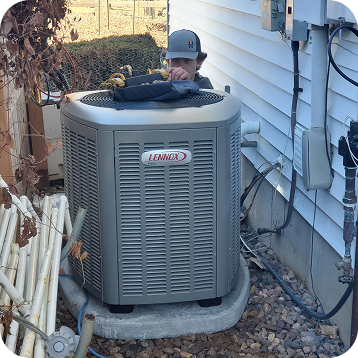
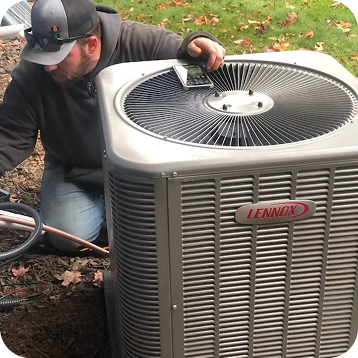
The experts at Hurlburt can assist with optimizing your residential air conditioning in Hastings, MN. Our local climate is a challenging one for home AC systems. In addition to heat, high humidity can make conditions uncomfortable and cause cooling systems to work hard. This area is also prone to intense storms that can force people indoors. If your cooling system fails, we can assist through fast, reliable AC repair. Our installers can upgrade your existing AC system with a modern, high-SEER2 configuration. We also provide seasonal maintenance that can help you maximize your investment.
Contact Hurlburt today to learn more about our residential air conditioning services in Hastings, MN.
Precision AC Repair for All Configurations in Hastings, MN
When you notice something may be wrong with your cooling system, call us right away for AC repair in Hastings, MN. Delaying service can lead to high utility costs and substantial repair bills. Our technicians travel from Heritage Ridge in the west to Glendale Road in the east. Our vehicles have all the replacement parts, refrigerants, and other materials necessary to complete most repairs.
We will arrive promptly and perform comprehensive diagnostics to reveal the underlying problem. We’ll discuss the problem with you and explore all your repair options with accurate pricing. Then, the repair takes place using high-quality parts and materials. You can always expect clean and safe work areas. A thorough test of the repair will occur before we leave.
Common AC Issues We Troubleshoot and Fix in Hastings
A common problem we deal with is an AC system not effectively managing indoor temperature. Often, the fix is as simple as cleaning the evaporator coil and swapping out the HVAC filter. Other common AC issues we diagnose and correct include:
Frequent cycling on and off
Mustiness and other foul odors
AC running for extended periods
Reoccurring condensate drain line clogs
High electricity consumption
Large temperature differences between levels
Expert Air Conditioning Installations in Hastings, MN
From Riverwood to South Pines and beyond, most homes have central air conditioning in Hastings, MN. It’s simply the most cost-effective way to cool and dehumidify an entire home. Precise AC sizing is critical to optimizing your comfort and reducing long-term costs. Our team performs load calculations using the latest methods set by the Air Conditioning Contractors of America (ACCA). This accounts for things like layout and cubic footage. When performing a new installation or AC replacement in Hastings, MN, we will consider location, sunlight exposure, building envelope, windows, and more.
Once we determine the optimal cooling output, we can help you explore the systems available. We’ll emphasize selecting the best AC system for your home and budget. Our team will help you consider energy-efficiency ratings, energy incentives, and energy-saving add-ons. After you select your system, we’ll oversee all aspects of the installation. That includes old equipment removal and disposal, permitting, and the code-compliance inspection. We’ll calibrate your new system, test it, and provide customer education as well.
Should You Repair or Replace Your AC?
It can be a challenge to decide between AC repair and AC replacement in Hastings, MN. We recommend an in-home consultation to explore your options and answer your questions. We’ll help you consider several key factors, including:
Household carbon footprint
Current system age and efficiency
Future repair and maintenance considerations
Repair costs versus potential long-term savings
Smart controls and other energy-saving add-ons
Specials, rebates, tax credits, and other incentives
Trustworthy AC Installation, Maintenance, and Repair
We’re a family-owned and -operated HVAC company with over 65 years of experience. We deliver outstanding customer service and give back to the communities we serve. We currently have over 6,000 5-star reviews and encourage you to read through what our customers are saying about us. We offer convenient scheduling online and by phone. Our site has additional details about our current promotions and Hurlburt Family Rewards maintenance plan. Reach us through our 24/7 live answering service if you need emergency repairs. For air conditioner installations in Hastings, MN, we provide free consultations and estimates in addition to financing on approved credit.
Welcome to the Hurlburt Family! Call today or contact Hurlburt online to schedule our residential air conditioning services in Hastings, MN.
FAQs
Let’s explore several of the common questions homeowners have about central air conditioning in Hastings, MN.
We can upgrade existing and new central AC systems with smart zone controls. There are a couple of different ways to achieve zoning in Hastings homes. One option is to add mini-splits in specific areas, such as bedrooms, home additions, and basements. You need individual thermostats, a variable-speed air handler, and either duct dampers or smart vents for this type of setup. This setup allows you to achieve better comfort while minimizing energy consumption.
Humidity control is a big challenge for Hasting homes due to the local climate and proximity to the Mississippi River. Schedule cooling tune-ups early every fall to ensure an efficient system and clean evaporator and condenser coils. If you have an older AC, consider upgrading to a high-efficiency system that can handle summer humidity. You can also consider investing in a basement dehumidifier or whole-house dehumidification system for humidity control.
Our experts recommend scheduling an AC tune-up every year in the spring, before needing to cool your home. If you have a heat pump, it also needs a heating tune-up early in the fall. Even with routine maintenance, monitor for signs that you need AC repair. This includes uneven cooling, high humidity, irregular cycling, foul odors, and unusual noises.
“Mark was very pleasant to work with! He was on time and took care of my plumbing needs efficiently and effectively. I would definitely use him again for any plumbing issues I may have. I have been using Hurlburt for all of my heating, plumbing, and electrical needs and have always been satisfied!”
Alison A.
“Great service! Professionals starting from the first person I spoke to on the phone and finalizing with the person who finished the installation and cleaned up after. Staff explained everything well. Highly recommended!!!”
Jessica F.
"Outstanding service as always! Hurlburt goes above and beyond for their customers. We got scheduled right away, and Shawn did a great job. I will continue to use these guys for everything!!!"
Nicole T.
"Our technician Mike was just awesome. Took the time to show me what he was doing and explained why he was doing it. Gave me an honest evaluation of my situation. You can’t go wrong with Hurlburt and the work ethics of the employees."
Jean C.
Trevor came to service our AC unit. Very happy with his work. Trevor was friendly and knowledgeable, and got our issue fixed quickly. Hurlburt Heating and Plumbing is a great company to work with."
Debbie L.
"Hurlburt has helped us out with both plumbing and HVAC services in the past and have always done a great job. All their technicians, especially Mark, have been kind, professional, and quick with service!"