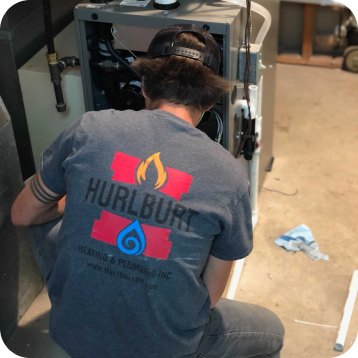
Since 1959 Hurlburt, we make it our mission to keep your home comfortable and protected.
with Purchase of Furnace & AC
Includes Merv 16 5" media cabinent and ApcoX Premium UV-light. Cannot be combined with any other offers. Must present coupon at time of service. Not valid on previously completed work.
The winter weather in Chippewa Falls makes it essential to have a dependable heating system because temperatures drop brutally low. When something goes wrong, you don’t want to risk damaging the system or injuring yourself with a DIY heating repair in Chippewa Falls. Instead, you need to call Hurlburt. We’ll send a trained technician to find and fix the underlying problem so that you don’t have to go without heat.
We’ll design a cooling system that perfectly matches your needs. This may look like a central setup with ductwork or a ductless mini-split using heat pump technology. The home’s square footage and layout impact choosing the right equipment. When something goes wrong, we’re just a phone call away. We’ll send a technician to implement a lasting solution that keeps the home cool and energy-efficient.
Our plumbers in Chippewa Falls, WI install water heaters, repair sump pumps, clear clogged drains and more. Emergency plumbing service is available for water leaks and burst pipes. We’re experts at finding and fixing hidden leaks beneath floors and behind walls.
You don’t want to ignore leaks and burst pipes because they increase the risk of water damage. Moisture buildup can lead to mold growth that causes respiratory and structural problems. Our solutions for leaks and burst pipes include pipe repairs, repiping and installing new shut-off valves. We’ll consider the leak’s location and severity to choose the best option.
Do you need to procure an EV charger upgrade? Hurlburt wants to help. We’ll match the charger to your charging needs and electrical system. Some homes require upgrades to their wiring to ensure compatibility with an EV charger. Some also require the installation of a dedicated circuit to feed the charging station. We’ll do a thorough inspection to see which upgrades your home needs.
We offer support for whole-home generators, smart home devices and other major electrical projects, too. We can even completely rewire your home. For example, if you’re still using outdated knob-and-tube wiring, we can upgrade it with modern grounded wiring. This makes the home safer by reducing the risk of electrical fires.
We’re the company that folks call when they need emergency HVAC in Chippewa Falls. We’ve helped numerous customers with furnace replacements after unexpected breakdowns. We’re also a trusted resource for achieving better indoor air quality in Chippewa Falls, WI. The humidity swings and seasonal allergens here contribute to stale, uncomfortable indoor air. With a whole-home air purifier in place, it becomes much easier to breathe easier and stay comfortable year-round.
We offer same-day service for emergency issues that need immediate attention, like burst pipes and refrigerant leaks. The technician who comes to your home will have gone through training and background checks. All HVAC installations we perform follow precise load calculations because we care about lasting performance.
Hurlburt isn’t your average home services company. We’re an all-in-one provider of electrical, HVAC and plumbing work. You won’t have to juggle multiple contractors just to get repairs or new installations. Homeowners frequently call us for heating and electrical upgrades. We love syncing thermostats and lighting with smart home systems to achieve better comfort and optimal energy efficiency.
Joining the Hurlburt Family Rewards Club gives you an easy way to save money on future repairs. Contact Hurlburt now to access professional solutions for plumbing, electrical, or HVAC in Chippewa Falls, WI.
Responded to a leak at the pressure tank assembly caused by a pinhole leak on the elbow joint connected to the tank. Upon inspection, identified the compromised copper bend and deteriorated tank tee fitting as the source of the water loss. Replaced the defective tank tee with a new brass fitting and repaired the affected section of copper piping using proper soldering techniques. Tested the pressure tank system for leaks and verified proper operation of all valves and connections. System restored to full functionality with no active leaks detected.
Returned to service PTAC unit that was not cooling following power utility repairs to external service line. Upon arrival, verified proper voltage now present at unit but system completely unresponsive. Diagnosed failed capacitor preventing compressor and fan operation. Replaced defective capacitor with new component per manufacturer specifications. After installation, compressor experienced delayed start-up, requiring extended run time before engaging. Cycled system multiple times to verify operation; unit eventually achieved consistent start-up and began cooling properly. Noted potential intermittent control board or compressor issue based on delayed engagement behavior. Advised customer that if starting problems recur or compressor fails to engage reliably, complete PTAC replacement may be more cost-effective than additional component repairs. Confirmed unit running and producing cool air at time of departure. Recommend monitoring system performance and reporting any further startin
Responded to no cooling complaint on 24-year-old R22 system. Found compressor failing to start at outdoor condenser unit. Discovered and removed mouse nest from condenser, inspected all wiring and confirmed no rodent damage. Attempted multiple starts; compressor eventually engaged but exhibited slow, labored startup indicating internal wear. Tested run capacitor, reading 27.8 µF on 30 µF rated capacitor—slightly low but within acceptable range to start compressor under normal conditions. Explained to homeowner that while capacitor replacement was an option, the compressor's hard-start behavior suggested internal mechanical failure likely due to age, and repair may only provide temporary relief. Discussed system age, obsolete R22 refrigerant, and reliability concerns. Homeowner elected to pursue full system replacement rather than invest in repairs on aging equipment. Scheduled replacement consultation.
Responded to service call for leaking water heater with no hot water. Upon inspection, found AO Smith water heater originally installed in 2021 experiencing active leak from element port area with visible water pooling at base and significant rust staining on lower tank section. Confirmed unit is still under manufacturer warranty valid through 2027. Documented blowout condition at element port with photographs showing corrosion damage and water accumulation. Determined warranty replacement is required due to tank failure. Unable to complete replacement on initial visit as parts supplier was closed for weekend. Scheduled return appointment to install warranty replacement water heater once new unit is obtained from supplier.
Responded to emergency call for leaking 1-inch PVC pipe in pool room mechanical area. Upon arrival, identified active leak at 90-degree elbow joint on non-potable water inlet line. Shut off water supply, removed failed PVC 90 fitting, and installed new elbow with proper primer and solvent cement. Utilized rubber coupling connectors to ensure secure, watertight seal at pipe joints. Restored water flow and pressure-tested all connections to verify complete leak elimination with no further dripping or seepage detected.
Responded to no hot water complaint on propane-fired tankless water heater displaying error code 29. Upon inspection, discovered extensive moisture on pipes surrounding unit and significant water intrusion inside cabinet. Internal components showed corrosion damage consistent with lack of preventative maintenance. Attempted troubleshooting procedures for error code 29 without successful resolution. Confirmed unit had never received manufacturer-recommended annual servicing during its operational lifespan. Due to combination of corrosion damage, out-of-warranty status, and absence of maintenance history, recommended full unit replacement rather than repair. Documented unit condition with photographs of manufacturer data plate and installed equipment. Coordinated follow-up estimate appointment for replacement options.
Responded to service call for Noritz NR98-DVC tankless water heater displaying error code 14, indicating flame failure or combustion issues. Upon inspection, determined unit is over 12 years old and has never been flushed, resulting in significant hard water mineral buildup in the heat exchanger restricting flow and causing unit shutdowns. Provided estimate for descaling flush service to remove calcium deposits and restore proper operation. Advised that if flushing does not resolve the issue, heat exchanger replacement or full unit replacement may be necessary due to age and condition of equipment.
Responded to no cooling call on 41-year-old residential air conditioning system originally installed in 1985. Found tripped breaker at outdoor unit and measured excessive amperage draw on compressor circuit using digital multimeter. Reset breaker temporarily to verify system operation, but compressor continued to draw high amps indicating internal failure. Comfort advisor appointment was already scheduled for same day to discuss system replacement options due to age and failed compressor.
Performed comprehensive inspection of 1991 pulse furnace and 2010 air conditioning system to assess equipment condition and replacement needs. Conducted pressure test on pulse furnace combustion system, verified all routine components, cleaned outdoor condenser unit, and tested AC electrical components and operation. All equipment tested and operating within normal parameters at time of inspection.
Responded to service call regarding sump pump cycling frequently without rainfall. Upon arrival, observed sump pump operation while water softener was in recharge cycle. Inspected sump pit and drainage system, noting at least six discharge lines including dehumidifier line draining into floor drain adjacent to sump pit. Monitored pump performance through multiple cycles and found no mechanical abnormalities with pump operation, float switch, or discharge line. Explained to customer that increased cycling frequency was due to combined water discharge from dehumidifier operation during current humid weather conditions and water softener regeneration cycle, both contributing significant water volume to drainage system. Pump functioning as designed under increased load conditions.
Responded to reported water leak dripping down the back of refrigerator into basement. Upon arrival, inspected the affected area and traced the source of moisture. Determined that the water drip originated from a bottle of baby distilled water stored on top of the refrigerator, not from any plumbing system failure. Conducted thorough inspection of surrounding areas, including water supply lines, drain connections, and nearby plumbing fixtures to rule out any actual leaks. No plumbing defects or active leaks were identified during the comprehensive inspection.
Responded to no-cooling complaint on 3-year-old system struggling to maintain setpoint with 5-degree temperature differential. Found condenser coil completely plugged with construction debris from recent remodeling work despite homeowner maintaining weekly filter changes. Cleaned outdoor condenser unit thoroughly, replaced indoor air filter, and ran full system diagnostics through S30 thermostat test mode with all parameters operating within normal range. Provided homeowner education on humidifier pad replacement procedure and programmed thermostat maintenance reminder for 6-month pad replacement interval. System restored to proper cooling capacity with no additional deficiencies identified.
Performed comprehensive cleaning of ductless mini-split indoor unit, including blower wheel and evaporator coil. Utilized cleaning bib for containment and coil jet cleaning system to remove accumulated debris and restore optimal airflow through the heat exchanger fins. Unit returned to proper operating condition with improved air circulation efficiency.
Responded to no-cool complaint with reported intermittent condenser operation and short-cycling every 5 seconds. Upon arrival, system was operational following homeowner's 6-hour breaker reset. Performed diagnostic evaluation on 2016 Nordyne R-410A 3-ton condenser and matching furnace serving large 2-zone residence with cooling zones on 1st and 2nd floors. Tested outdoor fan capacitor rated at 7.5 µF, measured 5.5 µF—below acceptable tolerance range. Weak capacitor identified as primary cause of intermittent fan starting issues and nuisance shutdowns. Inspected contactor and found visible pitting on contact surfaces, creating secondary intermittent electrical failure point contributing to cycling behavior. Verified all wiring connections intact with no evidence of shorts or damaged conductors. Tested compressor windings, all readings within manufacturer specifications. Evaluated indoor equipment consisting of 105,000 BTU furnace installed with floor-mounted configuration utilizing si
Responded to no hot water condition on combi boiler system experiencing recurring ignition failure. Unit displayed "ignition trials exceeded" error code, consistent with previous service history spanning two years. Performed system reset, cleared error codes, and cleaned flame sensor and ignition assembly to restore temporary operation. Upon inspection, identified Lennox furnace integrated into system piping configuration between gas regulator and boiler unit. Customer reported increased failure frequency during winter months when forced air heating is in use, suggesting potential gas pressure deficiency under higher demand conditions. Visual documentation captured internal components including gas valve assembly, burner components, and system rating plate specifications. Recommended follow-up service with HVAC technician equipped with precision manometer to conduct comprehensive gas pressure testing at inlet and manifold, as inadequate gas supply appears to be underlying cause of c
Responded to no cooling complaint on 2007 Goodman AC system. Upon arrival, found indoor temperature at 94°F with outdoor ambient at 107°F in direct sun. Diagnosed dual run capacitor with failed fan side terminal causing compressor to operate while condenser fan remained inoperative. Replaced defective dual run capacitor and tested system operation. Verified proper compressor and condenser fan motor function, confirmed adequate refrigerant charge levels, and left unit operating normally. Advised occupant that extended runtime would be required to bring indoor temperature down to setpoint due to extreme heat load differential.
Responded to complaint of air conditioning system running continuously without adequate cooling. Inspected 2017 Carrier air conditioning unit matched with 2003 Nordyne furnace. Used FLIR thermal imaging to verify cooling performance, measuring 56°F air temperature leaving evaporator with 80°F indoor ambient temperature, confirming normal temperature split and proper refrigerant charge. Inspected outdoor condenser unit and performed light coil rinse; coil showed minimal dirt accumulation. Discovered heavily restricted air filter with visible deflection, indicating significant airflow reduction. Replaced air filter and demonstrated restriction to homeowner. Discussed thermostat usage patterns, which revealed system being turned off during portions of the day, resulting in extended recovery run times when reactivated. System operating within normal parameters with no mechanical deficiencies identified. Extended runtime attributed to combination of restricted airflow from dirty filter and
Responded to a plumbing leak with unknown location and water supply still active. Upon investigation, identified the source as a leaking bathtub drain assembly. Successfully replaced the defective overflow and waste drain components, resolving the leak and restoring proper drainage function.
Responded to no cooling complaint on 20-year-old R-22 central air conditioning system. Upon arrival, confirmed thermostat calling for cooling but unit failing to provide adequate cooling capacity. Performed comprehensive diagnostic evaluation of outdoor condensing unit including pressure testing, amperage draw measurement, and temperature analysis at 95°F outdoor ambient conditions. Diagnostic findings revealed mechanically weak compressor with severely degraded internal efficiency. Measured operating pressures of 86.2 psig suction and 211 psig discharge, both significantly below normal specifications for R-22 system at current ambient temperature. Compressor amperage draw measured 4.25A against rated load amperage of 8.7A RLA, indicating insufficient mechanical compression. Discharge line temperature recorded at only 103°F, further confirming lack of compression efficiency and heat of compression. Combined diagnostic data conclusively indicated internal compressor failure with loss
Responded to no cooling call on 1999 air conditioning system. Upon inspection, discovered burned wire disconnected from contactor and failed compressor capacitor. The deteriorated capacitor caused excessive current draw, resulting in wire overheating and burning off the contactor terminal. Replaced both contactor and capacitor to restore system operation. Verified proper amperage draw on compressor to confirm no additional electrical issues. Performed condenser coil rinse, verified air filter condition, and cleared condensate drain line. System operational with 20-degree temperature differential across evaporator coil, indicating proper refrigerant charge and airflow. Provided maintenance plan information via email and scheduled comfort advisor visit to assess air exchanger installation request.
©2026 Hurlburt. All Rights Reserved.
Privacy Policy | Terms and
Conditions | [cookie_preferences_link]
This site is protected by reCAPTCHA and the Google Privacy Policy and Google Terms of Service apply.